ChatGPT and the 'Lost Boys'
Can AI step in where silence kills?
By Neil Munro
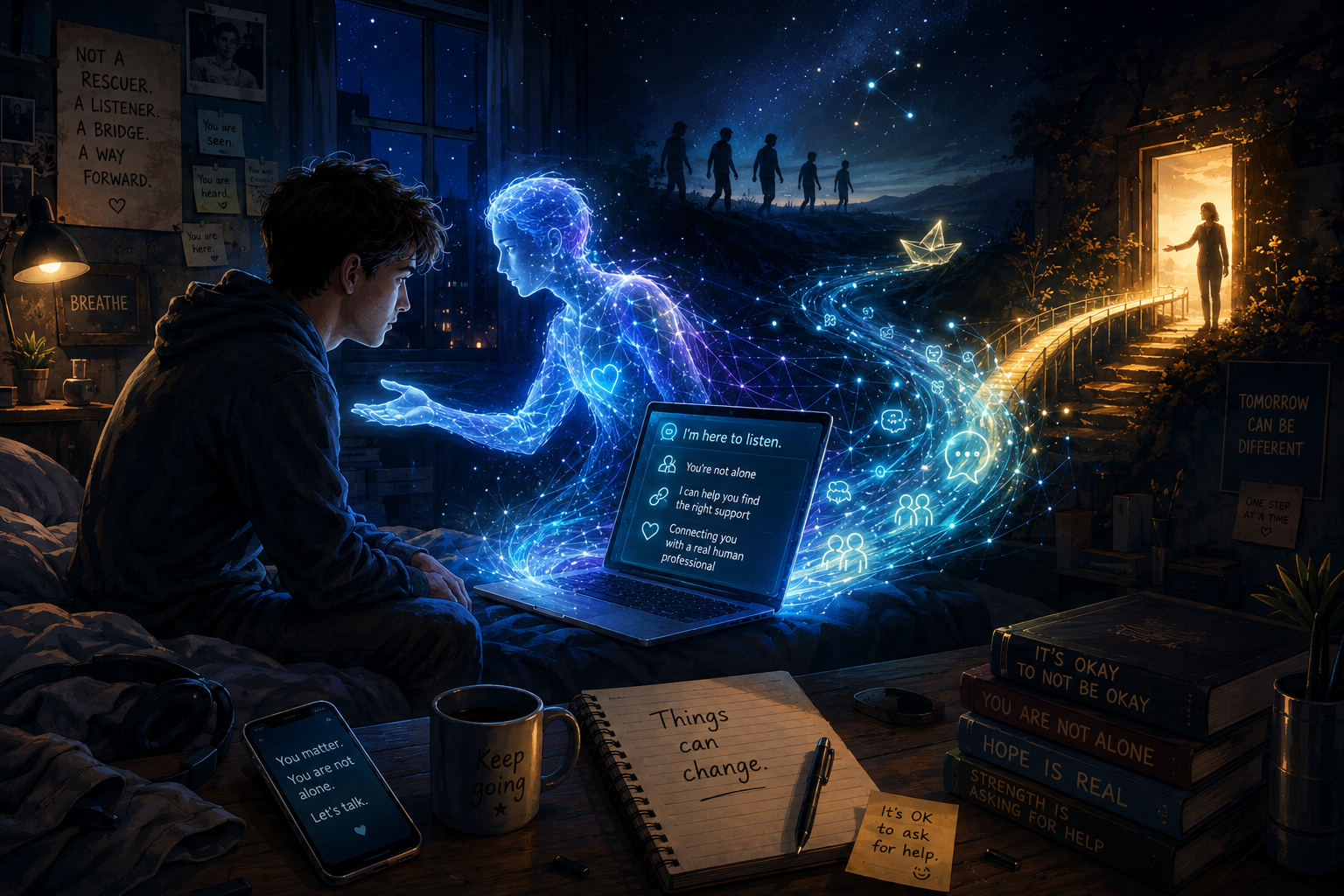
From Neverland to Alien: Earth, the “Lost Boys” echo through our myths and stories as a persistent melancholy trope — young men caught between innocence and isolation, searching for meaning in worlds that seem to have forgotten them.
That ancient sadness has become uncomfortably real.
In the UK, suicide remains the
leading cause of death among men under 35. The
latest data from the Office for National
Statistics shows that men account for
three-quarters of all suicides, with the highest
rates among those aged 45 to 49.
In Australia, the story is
strikingly similar — men take their own lives at
more than three times the rate of women, and
suicide is now the leading cause of death for
those aged 15 to 44.
In the United States, the
pattern is even more stark: men make up roughly
half the population but nearly 80% of all
suicides, with rates around four times higher
than among
females.
OpenAI’s recent announcement hints at a new kind of bridge across that silence.
The company plans to create a global network of licensed therapists who can be reached directly through ChatGPT — connecting users in crisis with real human professionals within the same conversational space. For many young men who might never pick up a phone or book an appointment, such a quiet, frictionless path to help could be life-saving.
Around the world, the same quiet need is being felt — and answered in different ways. In China, DeepSeek and other large language models are already being used in wellness and education settings, quietly exploring how technology might listen more deeply.
Whether through ChatGPT in the West or its counterparts in the East, the impulse is the same: to create a bridge between human isolation and understanding, using AI as a gentle companion rather than a distant machine.
For this is not just a Western crisis.
Research published in the Asian Journal of Psychiatry found that East Asian suicide rates remain higher than Western rates, with strong cultural pressures shaping patterns of despair — from Japan and Korea to Taiwan and beyond. Yet across continents, the emotional vocabulary of loneliness is eerily consistent.
If OpenAI’s global therapy network succeeds, it may do more than save lives; it could reshape how we think about connection itself. An AI companion cannot replace human empathy — but it can guide people toward it, gently and without judgment.
And perhaps that’s what our modern “Lost Boys” have been waiting for all along — not a rescuer, but a quiet listener in the dark, ready to remind them that they are still seen, still heard, still here.